
current location


current location
current location
 Arts & Crafts


 Hamilton - Bermuda
 3 hours ago
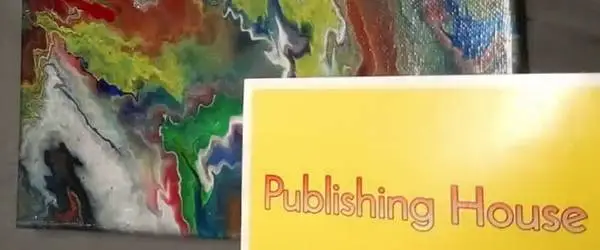
Public viewing 1/31/26 until midnight and available for sale anytime. Discounts given when you trade with your products and services instead of using cash in-person. FREE 24 hour parking in front of the art at 6316 San Juan Ave with heated restrooms and WiFi. Detailed visual description Color palette: The painting explodes with saturated hues—emerald and forest greens, cobalt and sky blues, fiery reds, burnt oranges, sunny yellows, and milky whites. The colors aren’t blended smoothly; instead, they collide and bleed into one another. Technique & texture: The surface shows classic acrylic pour / fluid art behavior—marbled cells, veining, and river-like currents. Paint appears to have been poured, tilted, and allowed to flow naturally, creating organic boundaries where colors meet. Some areas look glossy and thick, others thin and translucent. Movement: There’s a strong sense of motion, like a topographical map or satellite image of landmasses, storms, or lava flows. White and light gray lines act like fault lines or lightning, cutting through darker colors and giving the piece energy. Composition: No clear center—your eye travels across the canvas, pulled along winding color paths. The painting feels spontaneous rather than controlled, emphasizing process over precision. Emotional tone: Energetic, chaotic, and alive. It evokes nature—oceans, minerals, weather systems—without representing anything literal. Similar famous artists & movements This work aligns with several well-known artists and traditions: Jackson Pollock – for the emphasis on gesture, movement, and letting gravity and motion shape the final result. Helen Frankenthaler – especially her soak-stain technique, where color flows freely and creates atmospheric fields. Gerhard Richter (abstract works) – for the layered color interactions and sense of controlled unpredictability. Morris Louis – particularly his poured color fields and flowing bands. Zao Wou-Ki – for the energetic, landscape-like abstraction that feels elemental rather than representational. Contemporary fluid artists – such as those working in modern acrylic pour styles (e.g., artists influenced by cells, silicone effects, and tilting methods). Overall impression This is process-driven abstraction—the beauty comes from surrendering control and letting physics, pigment, and time collaborate. It sits comfortably between mid-20th-century Abstract Expressionism and today’s popular fluid-art movement, with a bold, almost geological presence.
Buy, Sell, Ditchit - The Win-Win Marketplace.
Ditchit offers a thrilling experience: list in 30 seconds, explore new arrivals daily, and connect with buyers and sellers in a secure community. Build your reputation, find hidden gems, and join millions of users shopping locally!
 Wanted
 Sell
Sell

 Meubels
  Appliances
  Mobile & Tablets
  Vehicles
  Services
  Clothing & Shoes
  Computers & Electronics
  Jobs
Jobs  Properties
  Kids & Babies
  TVs
TVs  Pet Supplies
  Games & Toys
  Auto parts
  Sports & Outdoors
  Video Games
  Hobbies
  Tools & Machinery
  Home & Garden
  Musical Instruments
  Bicycles & Motorcycles
  Jewelry & Accessories
  Farming
  Business Equipment
  Books & Magazines
  Local events
  Beauty & Health
  Tickets
  Antiques
  CDs & DVDs
  General
  Wanted
  More
More